
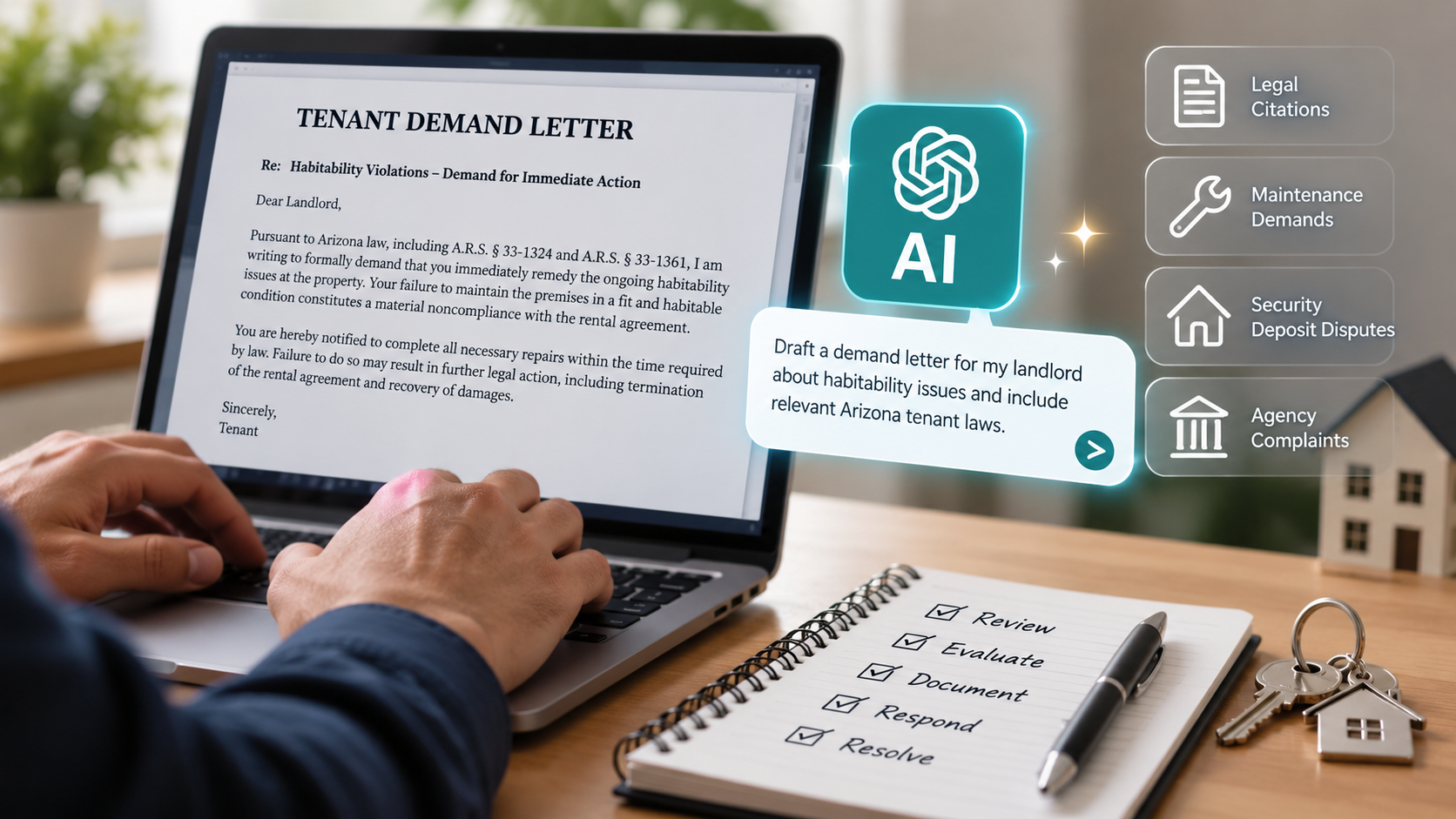
A tenant questions a security deposit deduction. Another requests an air-conditioning repair. Both situations are familiar to rental property owners. What’s changing is how those concerns are communicated.
With artificial intelligence tools such as ChatGPT, residents can turn a simple disagreement into a formal, multi-page demand letter referencing statutes, deadlines, and potential legal consequences.
At Rentals America, we’re seeing more of these communications. Complaints are becoming more frequent and detailed, and many appear to have been prepared using AI.
According to Zillow’s October 2026 Consumer Housing Trends Report, 78% of recent renters use AI at least occasionally. Among recent renters who used AI during their rental journey, 45% used it for personalized lease questions. These figures do not measure tenant disputes, but illustrate the growing use of AI for housing-related questions.
A New Approach to Familiar Disagreements
Disagreements between landlords and tenants are nothing new. Security deposit deductions, maintenance requests, and lease interpretations have always generated questions. What AI changes is the ease with which residents can research a concern and produce a detailed legal argument.
A tenant no longer needs extensive knowledge of Arizona landlord-tenant law to prepare a letter citing statutes and demanding corrective action. Some of these letters identify legitimate issues. Others contain incomplete interpretations of the law or misunderstand the procedures that apply.
We’re also observing residents who appear more inclined to submit formal complaints to regulatory agencies before allowing the normal resolution process to unfold. For Tucson rental property owners, the important lesson is that a complaint’s length or legal terminology doesn’t determine whether the underlying claim is valid.
Security Deposits Remain a Leading Source of Disputes
Security deposit disagreements are among the most common issues our property management teams encounter. AI allows residents to challenge individual deductions, question cleaning charges, and generate detailed arguments about damage and ordinary wear and tear.
These concerns deserve careful consideration. Landlords must evaluate the property’s condition, the lease, and the applicable law before assessing charges. However, AI doesn’t have firsthand knowledge of the property’s history unless accurate information is provided.
It may not know whether carpeting was damaged, whether a repair was previously documented, or whether an invoice supports a particular charge. That’s why thorough move-in and move-out inspections, photographs, maintenance histories, and vendor records remain so important.
For more information, see our Tucson article on Normal Wear and Tear vs. Tenant Damage.
Maintenance Demands Can Overlook Important Details
Maintenance requests are another increasingly common subject of AI-assisted correspondence. In Tucson, where reliable air conditioning is particularly important during the summer, maintenance concerns can understandably create urgency.
A formal maintenance demand can be intimidating, particularly when it cites deadlines or threatens legal action. Our experience reinforces the importance of first identifying the reported condition, determining whether it is urgent, and keeping the resident informed while the appropriate repair process moves forward. The wording of a demand does not replace that assessment.
Arizona law establishes obligations for landlords to maintain rental properties, but the appropriate response and available remedies depend on the circumstances. Some AI-generated letters overlook the distinction between an urgent condition and a routine repair. Others cite deadlines or remedies without accounting for required notices, reasonable repair periods, or other legal procedures.
At Rentals America, we’ve encountered situations where residents appear to rely on inaccurate or incomplete information when deciding how to proceed. This can complicate an otherwise straightforward repair request. The best response remains identifying the actual problem, determining its urgency, communicating clearly, and following the appropriate process.
AI Can Sound Authoritative Without Being Correct
One of AI’s limitations is its ability to present questionable legal information with considerable confidence. We’ve encountered letters referencing laws that don’t apply to residential rental properties, as well as arguments that overlook important circumstances or procedural requirements.
This doesn’t mean AI is always wrong. It can help residents identify legitimate rights and ask informed questions. But a legal citation should be verified, not accepted simply because it appears in a professionally written letter.
Landlords should also avoid dismissing a complaint because they suspect it was written using AI. The facts and applicable law matter more than the source of the wording.
How Tucson Landlords Should Respond
Start by separating the legal language from the underlying request. Identify what the resident wants, verify the relevant facts and requirements, and respond to the actual issue. A lengthy AI-assisted argument should not distract from legitimate concerns or established procedures.
Stay objective. Don’t allow legal terminology or an aggressive tone to distract from the underlying concern.
Review the facts. Examine the lease, property records, photographs, work orders, and relevant communications.
Follow the law and established procedures. Verify the applicable Arizona requirements rather than relying on the tenant’s interpretation.
Communicate promptly. Explain what is being investigated, what action is appropriate, and what the resident can reasonably expect.
Seek professional guidance when necessary. Formal legal notices, regulatory complaints, and significant disputes may require assistance from qualified counsel.
These practices were important long before AI became widely available. They’re even more valuable today.
Experience and Consistency Make a Difference
For individual rental property owners, responding to lengthy legal-sounding correspondence can require considerable time and research.
At Rentals America, our Tucson property management team relies on established procedures for inspections, maintenance coordination, resident communication, and security deposit accounting.
While AI is changing the volume and presentation of complaints, it hasn’t changed our fundamental approach. We focus on understanding the concern, reviewing the facts, complying with applicable requirements, and addressing the issue appropriately.
The Bottom Line
AI has made it easier for tenants to prepare sophisticated complaints and challenge landlords. That doesn’t necessarily make every complaint valid, nor does it mean landlords should become defensive.
A well-written demand is not a substitute for accurate facts, applicable law, and a reasonable resolution process.
Tucson rental property owners who maintain good records, respond professionally, and follow established procedures will be better prepared for this changing environment. The technology may be new, but the principles of good property management remain the same.