
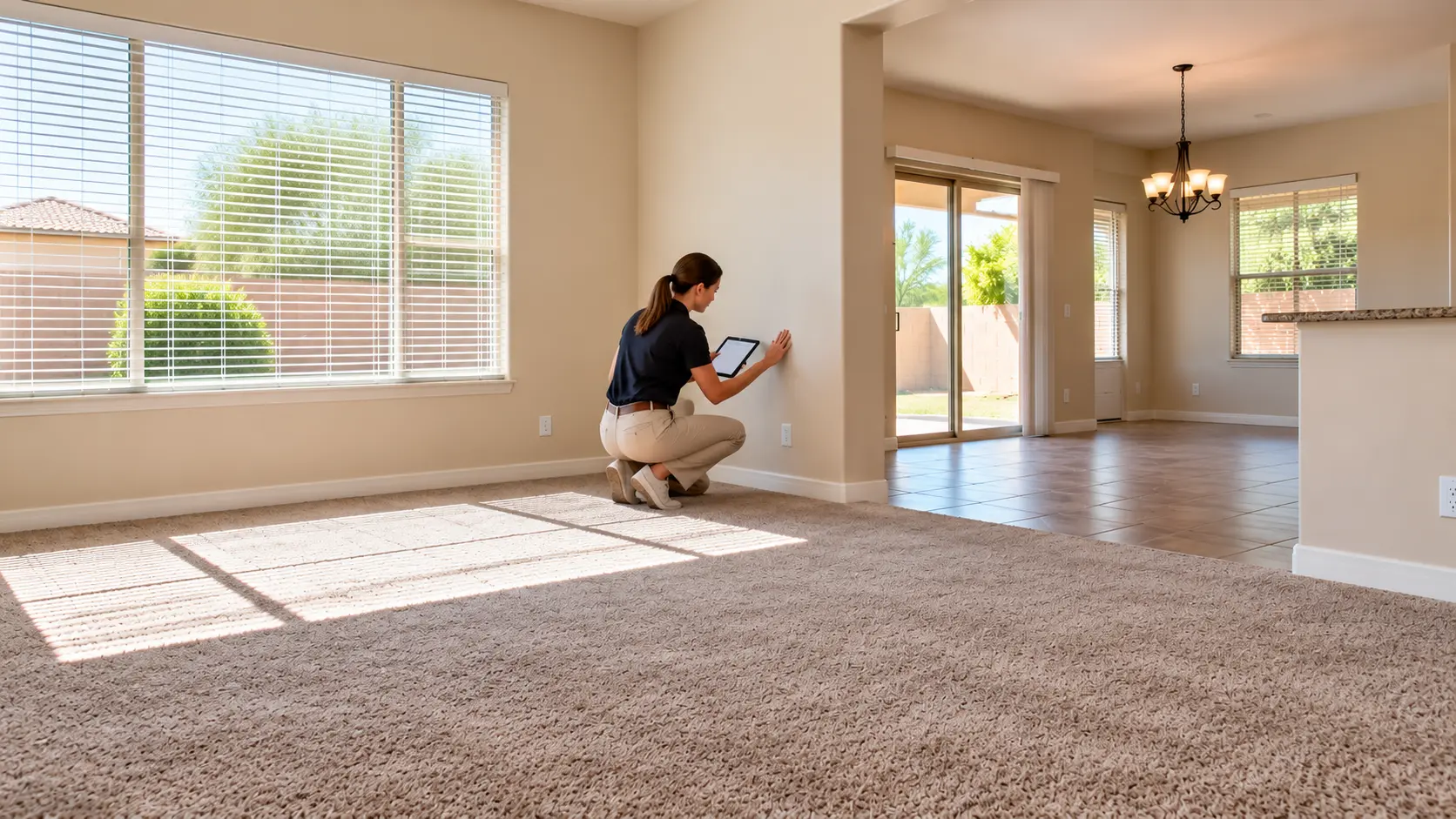
When a tenant moves out, the property may need cleaning, repairs, painting, or replacement of worn materials before it is ready for the next resident. But not every turnover expense is the tenant's responsibility.
Normal wear and tear is the deterioration that occurs through ordinary use and aging. Tenant damage generally involves harm beyond that expected deterioration, often caused by misuse, negligence, or failure to properly maintain the home.
For Arizona rental property owners, the distinction matters because normal wear and tear is generally an owner expense, while qualifying tenant-caused damage may be charged to the departing resident.
Determining the difference requires more than identifying what needs to be fixed. Landlords must also consider the property's condition at move-in, the length of the tenancy, the age of materials, and whether the proposed charge is reasonable and supported by documentation.
What Counts as Normal Wear and Tear in an Arizona Rental Property?
A rental home will naturally show signs of use over time. Even when residents care for the property, flooring wears down, paint ages, and fixtures eventually need replacement.
Common examples of normal wear and tear include:
- Minor wall scuffs and fading paint
- Carpet flattening in frequently used areas
- Light scratches on flooring from ordinary activity
- Worn or aging door hardware
- Deteriorating caulk and grout
- Appliances reaching the end of their service life
- Window coverings becoming brittle or faded with age
These conditions generally reflect the normal costs of operating and maintaining a rental property.
Sun-Damaged Blinds: A Common Arizona Consideration
Arizona's intense sunlight and prolonged heat can shorten the life of window coverings, particularly inexpensive vinyl or plastic blinds.
Over time, blinds may become brittle, discolored, or difficult to operate. Slats can eventually break through ordinary handling because the material has deteriorated.
That is different from blinds that have been bent, torn down, or otherwise damaged through misuse.
When evaluating broken blinds, the important questions are how old they were, what condition they were in before the tenancy, and whether the damage was caused by ordinary deterioration or resident actions.
The same principle applies to other materials exposed to prolonged sunlight and heat.
What Is Considered Tenant Damage?
Tenant damage is generally deterioration beyond what would reasonably occur through normal use.
Examples include:
- Large holes or significant damage to walls
- Broken doors, frames, or fixtures
- Carpet burns, tears, or permanent stains
- Deep scratches or gouges in flooring
- Damage from unauthorized alterations
- Pet-related damage to doors, flooring, or landscaping
- Excessive dirt, grease, or debris requiring additional cleaning
Arizona law requires tenants to keep their homes reasonably clean and safe, use fixtures and appliances appropriately, and avoid deliberately or negligently damaging the premises.
However, a damaged item does not automatically justify charging the resident its full replacement cost.
For example, replacing carpeting damaged by a tenant may be reasonable. Charging that tenant the entire cost of brand-new carpeting when the original carpet was already several years old may not be.
Normal Wear and Tear vs. Tenant Damage: Examples
The following comparison provides general guidance for common move-out conditions.
| Property Item | Normal Wear and Tear | Potential Tenant Damage |
|---|---|---|
| Paint and walls | Minor scuffs, fading, ordinary marks | Large holes, excessive wall damage, substantial staining |
| Carpet | Gradual flattening, traffic wear, fading | Burns, tears, significant stains, pet damage |
| Hard flooring | Minor surface scratches from ordinary use | Deep gouges, broken tiles, preventable water damage |
| Window blinds | Fading, brittleness, or breakage resulting from age and sun exposure | Bent slats, broken components, or other damage caused by misuse |
| Doors | Minor scratches, gradual hardware wear | Broken doors, significant dents, damaged frames |
| Appliances | Mechanical failure from age and ordinary use | Broken components resulting from misuse |
| Bathrooms | Aging caulk, minor finish deterioration | Broken fixtures or damage caused by improper use |
| Cleaning | Ordinary deterioration that cleaning cannot reverse | Excessive dirt, grease, debris, or unsanitary conditions |
| Landscaping | Natural plant aging or deterioration outside resident responsibility | Damage resulting from failure to perform agreed maintenance |
These examples are not automatic rules. The condition of the property before the tenancy and the circumstances surrounding the damage must be considered.
Why the Age and Useful Life of Materials Matter
The age of an item is often just as important as the damage itself.
Carpet, paint, appliances, and fixtures have limited useful lives. As they age, their value and remaining service life generally decline.
At Rentals America, we typically use a 5–7 year useful-life guideline for carpet and paint when evaluating potential tenant damage charges.
Our approach is informed by years of property management experience, including court challenges involving damage charges, and industry references such as HUD's sample life-expectancy chart.
HUD's estimates vary by material and housing type. They are useful reference points, not binding depreciation requirements for privately managed Arizona rental properties.
In our experience, judges reviewing disputed damage charges have considered the age and remaining useful life of materials when determining whether the amount charged was reasonable.
The 5–7 year guideline is not a fixed rule. What matters most is whether a particular charge is reasonable and supported by evidence.
An Example of Calculating Remaining Carpet Value
Suppose a rental home's carpeting cost $2,100 to install.
Five years later, a departing resident leaves permanent damage that cannot reasonably be repaired. Based on the carpet's quality and documented condition, the owner estimates that it had an expected useful life of seven years.
That means approximately two years of useful life remained.
A straight-line depreciation calculation would be:
$2,100 ÷ 7 years = $300 per year
$300 × 2 remaining years = $600
In this example, $600 represents an estimated remaining value rather than the carpet's full original cost.
This is an illustrative method for evaluating a potential charge, not an amount automatically owed under Arizona law.
The actual decision should also consider whether cleaning or localized repairs are possible, the carpet's condition before the damage, and the reasonable cost of replacement.
Does an Older Item Have Any Remaining Value?
An item reaching its estimated useful life does not automatically mean it has no value.
For example, an older appliance may still function properly, and an interior door may remain serviceable for many years beyond a general replacement guideline.
If a resident damages either item through misuse, a reasonable repair charge may still be justified.
However, charging the full cost of a new replacement without considering the age and condition of the original item can be difficult to support.
When Can Landlords Charge for Painting?
Painting is one of the most common sources of disagreement following a move-out.
A landlord may need to repaint a home simply because the existing paint has aged or because normal use has left minor marks and scuffs. Those are generally ordinary turnover expenses.
Other conditions may justify charges, including:
- Significant wall damage
- Large or numerous holes requiring repair
- Substantial staining
- Damage requiring more than ordinary repainting
The length of the tenancy matters.
If a resident occupied a home for several years, the existing paint may already be near the end of its expected useful life. In that situation, charging for an entirely new paint job may be unreasonable, even if some separately identifiable wall repairs are chargeable.
The important distinction is between the cost of restoring tenant-caused damage and the cost of refreshing a rental property for its next occupant.
What About Carpet Cleaning and Replacement?
Carpet cleaning and carpet damage should be evaluated separately.
At Rentals America, our lease requires residents to have the carpets professionally cleaned before returning possession of the property.
That contractual requirement is different from determining whether the carpet has experienced normal wear and tear.
A carpet can show ordinary traffic wear while still requiring professional cleaning under the lease. Likewise, professionally cleaned carpeting may still have burns, tears, permanent stains, or other damage beyond normal wear.
When carpet damage is identified, landlords should consider whether cleaning or a localized repair is sufficient before replacing the entire carpet.
If replacement is necessary, the carpet's age, previous condition, and remaining useful life should be considered.
Any cleaning or replacement charge must also be consistent with applicable law and the lease.
How Should Landlords Document Tenant Damage?
A reasonable charge is much easier to support when the landlord can establish what changed during the tenancy.
The most useful evidence generally includes:
Move-in inspection records. These establish the home's documented starting condition, including existing damage and wear.
Routine inspection photographs. Periodic records help show how the property changed during occupancy.
Move-out inspection records. These document the condition when possession is returned.
Maintenance and work-order history. Previous repairs can help establish whether an issue existed before move-out or developed through normal equipment failure.
Invoices and vendor estimates. These help establish the reasonable cost of correcting a condition.
At Rentals America, the Property Manager reviews the available records, makes an initial determination about potential resident charges, and discusses those charges with the owner.
Some conditions are difficult to classify. Photographs may show a broken fixture or damaged surface without establishing exactly how the damage occurred.
In those situations, the item's history, age, previous condition, and supporting records become especially important.
Why Reasonable, Supported Charges Are Important
Owners understandably want to recover expenses caused by residents. But an aggressive damage assessment can create more problems than it solves if the charges cannot be justified.
A sound approach starts with three questions:
- Was the condition caused by the resident rather than ordinary wear or an existing problem?
- Is the proposed repair or replacement reasonably necessary?
- Is the amount being charged supported by the item's condition and actual costs?
When an owner is considering a substantial deduction, especially one exceeding the security deposit, the strength of the documentation becomes particularly important.
Our experience with disputed charges has reinforced that a useful-life estimate alone is not enough. Supporting evidence matters.
The goal is to recover reasonable costs for actual tenant-caused damage—not to transfer ordinary maintenance and turnover expenses to the departing resident.
What Are Arizona's Security Deposit Rules?
Arizona's security deposit requirements are established in A.R.S. § 33-1321.
Landlords may generally apply refundable deposits toward qualifying unpaid rent, authorized charges, and damages resulting from a resident's failure to meet applicable obligations.
The statute also requires landlords to provide an itemized list of deductions and any amount due to the resident within 14 days, excluding Saturdays, Sundays, and legal holidays, after the statutory conditions involving termination of the tenancy, delivery of possession, and tenant demand are satisfied.
Unless the resident makes other arrangements in writing, the statute specifies mailing the itemization and any refund by first-class mail to the resident's last known address.
Landlords should also comply with the move-in documentation and move-out inspection requirements established by the statute.
Improper withholding of security deposit funds can create additional legal exposure.
For that reason, documentation, reasonable charges, and timely accounting are all important.
How Can Tucson Landlords Avoid Move-Out Disputes?
Many deposit disagreements can be reduced through consistent property management practices.
Establish the starting condition. Complete a detailed move-in inspection and retain photographs showing the property's condition.
Maintain records throughout the tenancy. Keep maintenance requests, inspection reports, and repair histories organized.
Account for aging materials. Consider the age of carpet, paint, appliances, and fixtures before determining replacement charges.
Obtain support for significant expenses. Use vendor estimates, invoices, and other evidence when necessary.
Separate damage from improvements. Replacing an aging item with a new one may benefit the owner, but that does not mean the resident should pay the full improvement cost.
Explain the proposed charges. Clear communication with the owner helps establish realistic expectations and reduces the likelihood of unsupported deductions.
A rental home does not need to look brand-new after every tenancy. The appropriate expectation is that residents return the property in accordance with their obligations, allowing for ordinary wear and tear.
Frequently Asked Questions
Is Normal Wear and Tear Deductible From a Security Deposit in Arizona?
Generally, no. Ordinary deterioration resulting from normal use is typically the landlord's responsibility. Deductions should be based on qualifying charges or damage beyond normal wear and tear.
Are Small Nail Holes Considered Tenant Damage?
Small holes from ordinary picture hanging may be considered normal wear and tear depending on the circumstances and lease. Numerous holes, large anchors, or significant wall damage may justify repair charges.
Can a Landlord Charge for Carpet Replacement After Several Years?
Potentially, if tenant-caused damage makes replacement necessary. However, the carpet's age, previous condition, remaining useful life, and reasonable replacement cost should be considered. A resident should not automatically be charged the full cost of new carpeting.
Can a Landlord Charge for Cleaning After Move-Out?
Yes, when the charge is supported by applicable lease obligations and law. Excessive dirt or debris may justify reasonable cleaning charges. Contractual requirements such as professional carpet cleaning should be considered separately from ordinary wear.
Is Pet Damage Considered Normal Wear and Tear?
Damage such as scratched doors, chewed trim, or permanently stained carpeting generally goes beyond ordinary wear. However, landlords still need to document the damage and determine reasonable charges.
For more information, read Should Landlords Allow Pets? A Guide for Tucson Rental Property Owners.
Who Makes the Final Decision About Tenant Damage?
The landlord or property manager typically makes the initial determination based on the lease, property condition, and available records. If a resident disputes the charge, a court may ultimately decide whether the deduction is justified.
A Practical Approach to Protecting Your Rental Property
Normal wear and tear is an unavoidable part of rental property ownership. Tenant-caused damage is different, but determining the appropriate charge requires careful evaluation.
The strongest approach combines thorough inspections, maintenance records, reasonable useful-life estimates, and support for actual repair costs.
Rentals America helps Tucson-area property owners manage these decisions through documented property inspections, maintenance coordination, and experience handling rental property turnover.
Learn more about our Tucson property management services and how we help protect rental property investments.